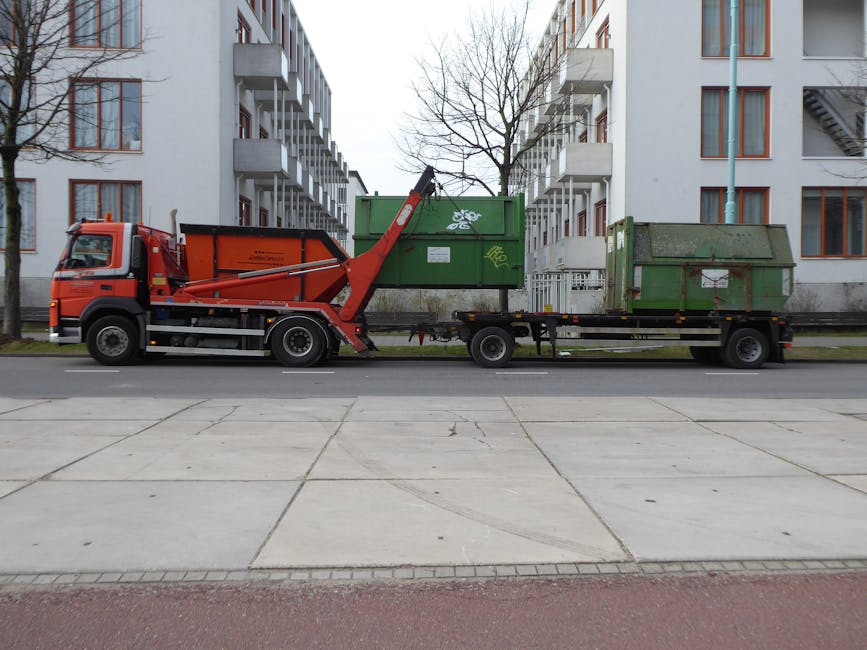
Real cost of rubbish removal in Edmonton compared to skip hire
If you are trying to work out the real cost of rubbish removal in Edmonton compared to skip hire, you are probably at that awkward stage where the job is half planned and the mess is already staring back at you. A broken sofa in the hallway. A pile of builder's offcuts in the driveway. Maybe a garage that has quietly turned into a storage unit. Let's face it, rubbish removal sounds simple until you start comparing the full cost, the time involved, and the little extras that can make the cheap option suddenly not so cheap.
This guide breaks down how rubbish removal and skip hire differ in practice, what drives the price up or down, and which option tends to make more sense for different jobs in Edmonton. We will keep it straight, practical, and local. No fluff. Just the kind of detail that helps you make a proper decision, not a guess.
Along the way, we will also touch on common pitfalls, compliance concerns, and the real-world details that people often miss when comparing quotes. A lot of the price difference is not about the headline figure at all. It is about convenience, access, labour, permits, timing, and what happens on the day when the pile is bigger than expected.
Contents
- Why the cost comparison matters
- How rubbish removal and skip hire work
- Key benefits and practical advantages
- Who this is for and when it makes sense
- Step-by-step guidance
- Expert tips for better results
- Common mistakes to avoid
- Tools, resources and recommendations
- Law, compliance, standards, or best practice
- Options, methods, or comparison table
- Case study or real-world example
- Practical checklist
- Conclusion
- Frequently asked questions
Why Real cost of rubbish removal in Edmonton compared to skip hire Matters
People usually compare the upfront prices first. Fair enough. But that can be misleading. Two services can look miles apart on paper and then end up much closer once you add the bits that matter: labour, permit needs, waiting time, missed collections, loading effort, and whether you need the waste gone today or can live with a skip sitting outside for several days.
In Edmonton, space can be tight. Streets are busy, parking is not always forgiving, and access varies wildly from one property to the next. A ground-floor flat on a narrow road, for example, can be very different from a house with a clear driveway. That is why the real cost is not just the service fee. It is the complete cost of getting the rubbish off your property with the least hassle.
The comparison matters for three simple reasons:
- Budget control: the cheapest-looking option may not be the cheapest outcome.
- Time: a quick clearance can save you a day of loading, lifting, and waiting around.
- Convenience: in many cases, the value is in not having to do the heavy lifting yourself.
And yes, there is a hidden cost in your own time. Nobody invoices you for standing in the rain at 7:30am trying to flatten a wardrobe into a skip, but your back might complain the next morning. That counts for something.
For homeowners, landlords, letting agents, and tradespeople, this comparison is especially useful when the job is time-sensitive. If you are clearing a property for sale or finishing a refurb, delays can be expensive in a very ordinary, irritating way.
How Real cost of rubbish removal in Edmonton compared to skip hire Works
To compare the two properly, you need to understand what you are actually buying.
Rubbish removal
Rubbish removal usually means a team arrives, loads the waste for you, and takes it away. The price often includes the labour, transport, disposal, and sometimes sorting for recycling. With some jobs, the quote is based on volume; with others, it may be based on the type of waste, the access conditions, or the time needed on site.
The big advantage is straightforward: you do not have to move the waste yourself. If a sofa is wedged in the spare room or a pile of mixed junk is spread across a garden, the removal team does the physical work. You point, they lift, it disappears. Simple, really. Well, simpler.
If you are considering a more general service, the broader waste removal option can be useful when the job includes mixed household items, bulky bits, and awkward access that make self-loading impractical.
Skip hire
Skip hire works differently. A skip is dropped off, you fill it yourself, and then it is collected later. The headline price may look attractive, especially for larger clear-outs, but it usually assumes you can load everything safely and efficiently. If the skip sits on the public road, a permit may be needed. If access is tight, the size you actually want may not fit. And if you underestimate the amount of waste, you can end up paying for an extra skip or making a second booking.
Skip hire suits people who have time, labour, and enough space to make it work. It can be a solid choice for ongoing projects, especially at a property where the work will stretch over a few days or weeks.
The real cost difference in practice
The practical difference is this:
- Rubbish removal: usually costs more in labour, but saves time and effort.
- Skip hire: often looks cheaper at first, but may involve extra costs and more manual work.
So which is better value? That depends on the size of the job, the waste type, and how much work you want to do yourself. A small-to-medium clearance with awkward items often ends up better value as rubbish removal. A larger, predictable pile with easy access can lean towards skip hire.
Key Benefits and Practical Advantages
There is a reason many people in Edmonton choose rubbish removal instead of a skip. Or, to be fair, they choose it after the skip maths starts getting annoying.
Why rubbish removal can offer better value
- No lifting for you: especially useful for sofas, beds, wardrobes, appliances, and builder's waste.
- Fast turnaround: ideal if you need the space cleared the same day or next day.
- Less disruption: no skip sitting outside for days, attracting attention or blocking parking.
- Better for awkward properties: common in terraced streets, flats, and homes with limited frontage.
- Useful for mixed loads: ideal when household junk and bulky items are combined.
That last point matters more than people think. Mixed loads can be annoying for skip users because they must plan the fill order, while a clearance crew can work around the mess and load it efficiently. One box, then a mattress, then a bit of timber. Done. It sounds almost too simple, but that is the point.
Why skip hire can still make sense
- Longer projects: if you are doing a refurb over several days, a skip gives you storage on site.
- Predictable waste volume: useful when you know roughly how much debris you will generate.
- DIY convenience: handy if you are already on site and can load as you go.
For some jobs, especially repetitive builder's waste, skip hire can work out neatly. But even then, the hidden extras need checking. The price only stays attractive if the job goes to plan. And jobs rarely behave themselves, do they?
Who This Is For and When It Makes Sense
This comparison is useful for quite a broad mix of people, but the decision usually depends on the same few situations.
Homeowners clearing bulky waste
If you are clearing out a spare room, loft, garage, or entire home, rubbish removal is often the quicker choice. It is especially helpful when items are too heavy for one person or too awkward to get down stairs safely. If you are looking at a full house declutter, a dedicated house clearance service can be more efficient than hiring a skip and doing all the loading yourself.
Landlords and letting agents
End-of-tenancy clearances rarely arrive in neat little piles. There may be furniture, bags of mixed rubbish, forgotten bedding, and the occasional mystery item that nobody claims. A clearance team can often finish the job faster than arranging a skip, especially if the property needs to be turned around quickly.
Tradespeople and renovators
If your work produces a steady stream of debris, skip hire may still work well. But for one-off jobs, urgent clearances, or sites where access is awkward, rubbish removal can reduce delay. Builders often underestimate how much time gets lost filling a skip by hand. It adds up.
Businesses and offices
Office moves, refurbishments, and storage clean-outs usually need discreet, organised waste handling. For those jobs, business waste removal or office clearance may be more practical than a skip, especially if staff need the area kept clear and presentable.
When a skip may be better
Skip hire can still be the right choice if:
- you have a large and ongoing stream of waste,
- you have room for the skip,
- you are happy to load it yourself, and
- you want a simple on-site container for a longer project.
If any of those are shaky, the value proposition starts to wobble a bit.
Step-by-Step Guidance
If you want to compare the real cost properly, use this simple process. It keeps the decision grounded instead of emotional. People do not always realise how easy it is to overpay for the wrong setup.
- List the waste type. Separate household junk, furniture, green waste, builder's rubble, and anything hazardous or restricted.
- Estimate the volume. Think in practical terms: one room, half a garage, a small pile, a full van load, or multiple loads.
- Check access. Can a vehicle get close? Are there stairs, narrow gates, or parking restrictions?
- Consider your own labour. Would you be loading everything yourself, or do you need help?
- Decide how fast it must go. Same-day, next-day, or sometime this week?
- Ask about disposal included. Make sure the quote includes transport and disposal, not just collection.
- Compare any extras. For skips, check permit needs, collection times, and possible overfill charges.
- Weigh the total cost, not the headline price. That is the bit people miss most often.
A small example: if you have a few bulky items and mixed junk in a terraced house, a skip might be cheap on paper but awkward in reality. Rubbish removal may cost a little more upfront and save you a lot in time, stress, and manual effort. That is real value, not just a cheaper number.
Expert Tips for Better Results
In our experience, the best savings come from being a bit more prepared before booking. Not perfect. Just prepared enough.
1. Sort what you can before the crew arrives
If you can separate obvious recyclables, general rubbish, and reusable items, the job can move faster. That said, do not spend half a day overthinking every plastic tub. Practical sorting is enough.
2. Be honest about access
Tell the provider if there are stairs, low ceilings, narrow alleyways, or awkward parking. Access problems are one of the main reasons prices shift on the day. A clear description helps avoid surprises, and nobody likes surprise pricing.
3. Check whether labour is included
Some quotes look low because they assume you will help load. Others include full labour. Make sure you know which model you are being quoted on.
4. Think about the waste mix
Mixed waste can be more efficient through rubbish removal if the team can sort and load it in one visit. For building jobs, you may want to compare this with builders waste clearance rather than defaulting to skip hire.
5. Ask what happens if there is more waste than expected
This is a good one. Many people forget to ask. If you have more than planned, is there a second load charge, a top-up fee, or a revised quote? Better to know before the van arrives.
One more thing: if you are comparing several quotes, keep the scope identical. Same waste. Same access. Same timing. Otherwise you are not comparing prices, you are comparing guesses. Bit of a mess, frankly.
Common Mistakes to Avoid
These are the mistakes that trip people up most often when comparing rubbish removal with skip hire.
- Choosing on headline price alone. The cheapest quote can become the most expensive once extras are added.
- Underestimating the waste volume. A skip that is too small or a clearance team booked for too little time can both create extra cost.
- Ignoring access issues. Tight streets and awkward entrances change the economics fast.
- Forgetting permit costs. Particularly relevant if a skip needs to go on the road.
- Assuming all waste is accepted the same way. Some items need special handling and should be declared in advance.
- Not checking what is included in disposal. Labour, loading, transport, and tipping should all be clear.
- Leaving the booking too late. Urgent jobs can narrow your options and push prices up.
There is also the classic mistake of thinking, "I'll just hire a skip and deal with it myself." That sounds sensible until you are halfway through a rainy afternoon with a broken bed frame and no parking space. Not ideal.
Tools, Resources and Recommendations
You do not need specialist tools to compare these options, but a few basics help you make a more accurate choice.
- Room-by-room list: write down what needs to go so you can compare volume properly.
- Photo set: take clear pictures from a few angles to help with quoting.
- Simple measurements: rough dimensions of large items help more than people expect.
- Access notes: mention parking, steps, gate width, and whether the waste is inside or outside.
- Timing plan: note your preferred collection window, especially if you need the job done quickly.
If you are unsure which service is the right fit, it can help to look at related options such as furniture clearance, flat clearance, or garage clearance depending on the type of waste involved. Those pages can give you a better sense of how service type affects pricing and effort.
For people dealing with outside spaces, garden clearance is another useful comparison point, especially when green waste, broken pots, and general clutter are all mixed together.
Law, Compliance, Standards, or Best Practice
Waste disposal is not just a pricing issue. There are also basic legal and best-practice expectations to think about. You do not need to be a compliance expert, but you do want to avoid handing waste to an unlicensed operator or leaving yourself with a problem later.
As a rule, use a provider that can explain how waste is handled, where it goes, and how recycling is managed. Good operators should also be able to talk plainly about safety, insurance, and what items they can or cannot take. If a quote sounds vague, be cautious.
For builders and refurb projects, it is especially sensible to check permit requirements and site restrictions before choosing a skip. The page on permit issues for builders rubbish in Edmonton is a helpful reminder that road placement can change the real cost quite a lot.
It is also worth reading the company's health and safety policy and insurance and safety information before booking. That is not just box-ticking. It tells you how seriously the operator takes property protection, manual handling, and risk on site.
Best practice is simple: describe the waste honestly, declare anything unusual, confirm the quote scope, and keep a record of what was agreed. If you are comparing providers, transparency matters more than a flashy low number.
Options, Methods, or Comparison Table
Here is a clear side-by-side view of the two main options. The details will shift by job, but this gives you the shape of the decision.
| Factor | Rubbish removal | Skip hire |
|---|---|---|
| Upfront price | Often higher | Often lower at first glance |
| Labour | Included | You usually do the loading |
| Speed | Usually faster | Depends on delivery and collection windows |
| Access needs | Good for tight or awkward properties | Needs space for delivery and placement |
| Permits | Usually not needed for collection-only jobs | May be needed if placed on the road |
| Best for | Bulky, mixed, urgent, or labour-heavy jobs | Longer projects with steady waste output |
| Risk of hidden extras | Lower if the quote is clear | Can rise with permits, overfill, and extra collections |
The table is useful, but the real decision usually comes down to one question: do you want storage or service? If you need somewhere to keep waste while you work through a project, skip hire has the edge. If you want the waste gone without the lifting, rubbish removal often wins on total value.
Case Study or Real-World Example
Picture a typical Edmonton household clearance. A family has sold a property and needs to remove a sofa, dining table, a few chairs, old boxes from the loft, and some garden clutter from the back yard. The house is on a narrow street, parking is limited, and they need the place cleared before the final clean.
At first glance, a skip seems cheaper. But once they factor in the lack of driveway space, the possibility of a permit, and the time needed to load everything themselves, the picture changes. Two adults could probably manage, but it would take most of a day and involve plenty of carrying through the house. Not fun.
They choose rubbish removal instead. The team arrives, assesses the load, lifts the bulky items, and clears the clutter in one visit. The price is not the lowest number available, but the overall cost is lower in the ways that matter: time saved, less stress, no parking fight, and no two-day project turning into a four-day one.
Now compare that with a small renovation job in a property with a driveway and a steady stream of debris. In that scenario, skip hire may be the cleaner fit. The waste is predictable, access is easy, and the crew can work around the skip as they go. Different job, different answer. Simple enough.
Practical Checklist
Before you book, run through this quick checklist. It can save you from the usual headaches.
- Have I listed every item that needs removing?
- Do I know whether the waste is mixed, bulky, green, or builder's waste?
- Have I checked access, stairs, and parking?
- Do I need same-day or next-day service?
- Have I compared the total cost, not just the headline price?
- Do I understand whether labour is included?
- Have I asked about extra charges for overfilling or extra loads?
- Do I know whether a skip would need a permit?
- Have I checked safety and insurance information?
- Am I choosing the option that saves the most time as well as money?
If the answer to several of those is "not yet," that is fine. Better to pause for ten minutes now than lose half a day later.
Conclusion
The real cost of rubbish removal in Edmonton compared to skip hire is not just about the number on the quote. It is about labour, access, timing, permits, convenience, and how much disruption you can live with. For many small-to-medium clearances, especially where access is tight or the waste is bulky and mixed, rubbish removal gives better overall value. For larger, slower projects with easy access and steady waste, skip hire can still be the right call.
The best choice is the one that fits the job properly, not the one that looks cheapest for five seconds on a screen. Be honest about the waste, compare like with like, and think beyond the headline figure. That is usually where the real savings hide.
If you want a simpler way to compare your options and avoid paying for the wrong setup, it is worth speaking to a provider who can explain the difference clearly and quote against the actual job, not a vague guess.
Get a free quote today and see how much you can save.
Sometimes the smartest choice is simply the one that makes the pile disappear without drama. And honestly, that's a pretty good outcome.
Frequently Asked Questions
Is rubbish removal more expensive than skip hire in Edmonton?
It can be, but not always in the real sense. Rubbish removal often has a higher upfront price because labour is included, yet it may cost less overall once you factor in your time, loading effort, access issues, and permit-related extras.
When is skip hire cheaper than rubbish removal?
Skip hire is often cheaper when you have a large, predictable amount of waste, enough space for the skip, and people on site who can load it themselves. It works best for longer projects where the skip acts as on-site storage.
What hidden costs should I watch for with skip hire?
Common extras can include permit fees, overfill charges, longer hire periods, restricted access problems, and extra collection costs if the job runs over. The quote may look low at first, so always check the full scope.
Does rubbish removal include labour?
Usually, yes. That is one of the main reasons people choose it. The crew loads the waste for you, which is especially useful for heavy furniture, awkward items, or properties with stairs.
What type of waste is best for rubbish removal?
Bulky household waste, mixed junk, furniture, loft contents, garage clutter, and many end-of-tenancy clearances are often well suited to rubbish removal. It is also handy where access is tight or you need the area cleared quickly.
What type of waste is best for skip hire?
Skip hire tends to suit steady builder's waste, renovation debris, and projects where waste builds up gradually. If you can load as you go and have space for the skip, it may be a practical option.
Do I need a permit for a skip in Edmonton?
Possibly, if the skip will sit on a public road or highway. Requirements can vary, so it is sensible to check before booking. If the skip can be placed on private land, that may avoid the issue.
How do I compare quotes fairly?
Use the same waste description, same access details, and same timing when comparing. Ask whether labour, transport, disposal, and any extras are included. If one quote is much lower, check what it leaves out.
Can rubbish removal handle same-day jobs?
Often yes, subject to availability. Same-day or next-day collections are one of the big advantages of rubbish removal, especially when you need a property cleared quickly before a move, clean, or handover.
What should I do if I am not sure how much waste I have?
Take photos, make a room-by-room list, and describe the larger items clearly. A decent provider can usually give a more accurate quote from that information than from a vague estimate like "quite a bit."
Is rubbish removal better for awkward access properties?
Usually, yes. Terraced streets, flats, tight gates, narrow hallways, and limited parking often make rubbish removal more practical than skip hire because the team handles the loading and can work around the access constraints.
Can I mix furniture and general rubbish in one clearance?
In many cases, yes, as long as the provider accepts the full mix of items. This is one reason rubbish removal can be easier than trying to sort everything into a skip yourself.
What is the best next step if I want an accurate price?
Gather a few photos, note the access conditions, and ask for a quote that includes labour, removal, and disposal. That gives you the clearest comparison between rubbish removal and skip hire, and it usually leads to a better decision.